Hyaluronic
Hyaluronic
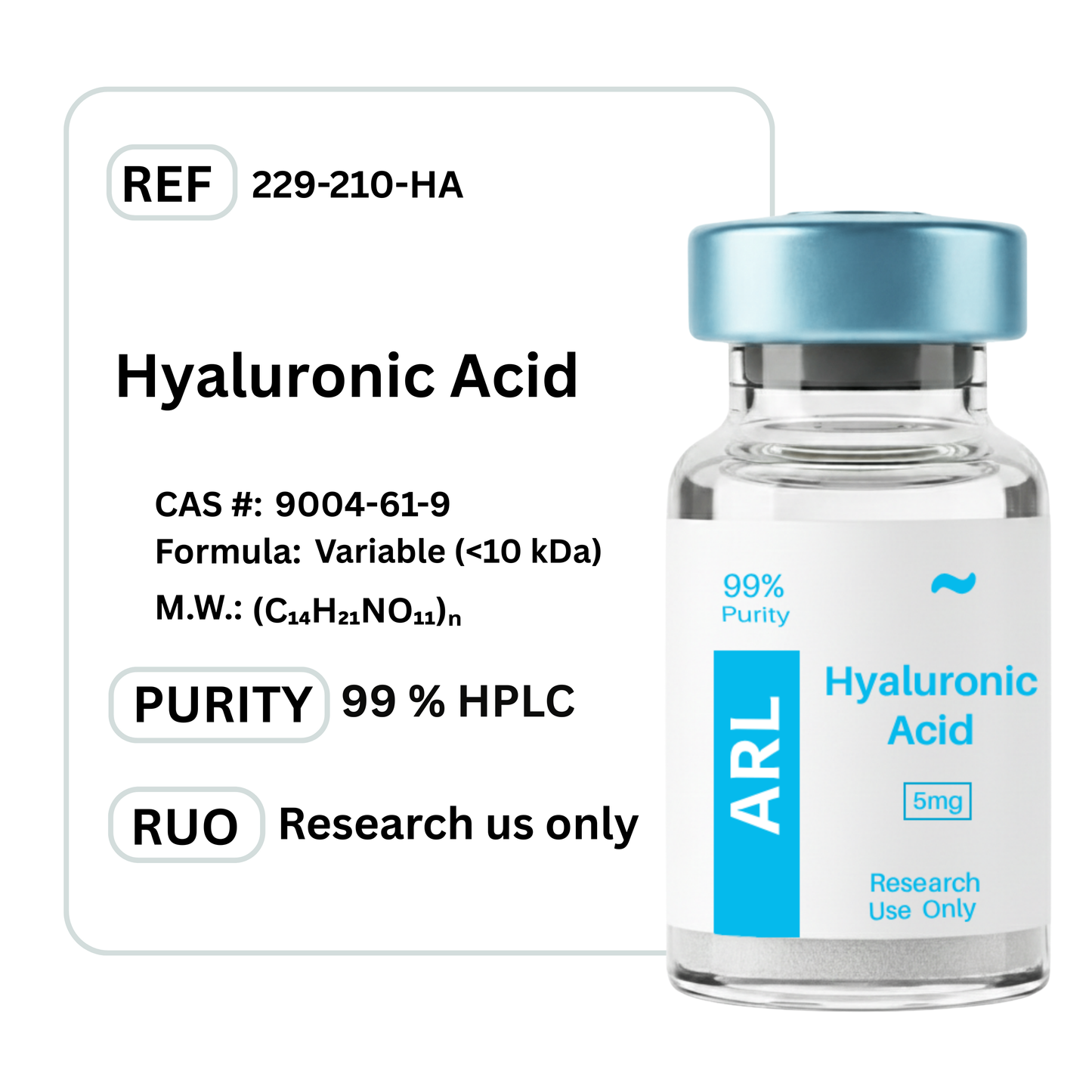
This batch of Hyaluronic Acid Peptide has been third party lab tested and verified for quality.
Contents: Hyaluronic Acid (Sodium Hyaluronate, Glycosaminoglycan Polymer)
Form: Powder
Purity: 99.3%
Couldn't load pickup availability
Free Reconstitution Solution automatically added to your cart with each order.
This product is Made, Tested & Shipped From United States.
Shipping & Delivery
We are committed to delivering fast, reliable, and transparent shipping for all orders. Please review our policy below for details on delivery times, tracking, and what to expect with every purchase.
View Full Shipping Policy
Verified+

Hyaluronic Acid: Comprehensive Polymer Analysis and Research Applications
Introduction
Hyaluronic Acid (HA) exists as a substantial macromolecular polysaccharide distributed throughout tissues responsible for structural connection, surface coverage, and neural function. Contemporary research emphasizes HA's exceptional hydrophilic character, its preservation of extracellular matrix organization, and its regulatory influence on intercellular signaling and molecular transduction. Investigations characterize how HA engages binding partners on cellular surfaces to enhance hydration status, reinforce mechanical integrity, and initiate restoration and developmental mechanisms.
Scientific Focus Areas
Both experimental laboratory and clinical research contexts document HA's performance in dermal architecture, articular mechanics, and ocular function. Scientific investigation prioritizes HA's lubricating properties, its simultaneous fluid and solid characteristics, and its contribution to tissue elasticity and durability. Research also examines how HA suppresses inflammatory processes and directs tissue reconstruction and recovery functions in precisely controlled experimental conditions.
HA continues as a research priority for its distinctive physical and chemical attributes: flow characteristics, capacity for moisture saturation, and matrix stabilization properties. Research initiatives assess how HA constructs optimal cellular microenvironments, facilitates molecular transport and nutrient distribution, and regulates organization of macromolecular glycoprotein assemblies. Scientific endeavor extends to HA's involvement in repair mechanisms, suppression of damaging oxidative processes, and promotion of tissue regeneration and reformation in collagenous tissue systems.
Polymer Characterization
Molecular Structure and Composition
Hyaluronic acid constitutes a continuous-chain glycosaminoglycan formed from successive disaccharide repetitions (N-acetyl-D-glucosamine combined with D-glucuronic acid). Across different batches, molecular weight measurements vary considerably; consequently, universal molecular formula specification is impractical. Batch-level characterization uses validated analytical techniques.
Mass Determination (MS): 711.9 Da
Purity Assessment (HPLC): 99.42%
Batch Identifier: 2025007
Primary Elution Time: 3.48 min
Analytical Equipment: LCMS-7800 Series (Standardized Calibration)
Technical Notes: Primary active constituent confirmed through mass and elution characteristics; trace secondary element measures 0.58% area fraction
Research Domains and Investigative Focus
Moisture Maintenance and Hydration
Scientific examination establishes HA's extraordinary capacity to sequester water, thereby supporting tissue saturation, maintaining cellular pressure, and sustaining mechanical pliability in experimental skin tissue and interconnected tissue preparations.
Articular Viscoelasticity and Joint Function
Laboratory studies assess HA's capacity to function as both viscous fluid and elastic solid within joint cavities, emphasizing its reduction of surface friction, dissipation of mechanical load, and facilitation of unrestricted articulation throughout movement.
Wound Recovery and Regenerative Biology
Research documents HA's capacity to suppress inflammatory cascade events, encourage cellular translocation and movement, and organize newly synthesized matrix material throughout tissue healing and restoration phases.
Molecular Receptor Interactions
HA's affinity for specific molecular binding sites, especially CD44 receptors, represents essential mechanisms governing cellular positioning, controlling cellular reproduction rates, and orchestrating localized tissue modification processes.
Oxidative Stress Suppression
Research indicates HA potentially diminishes harmful oxidative damage manifestations occurring under metabolic or mechanical stress circumstances.
Research Material Classification
HA research preparations are designated exclusively for scientific investigation undertaken by qualified laboratory personnel. Current authorization excludes human clinical application and veterinary therapeutic application.
Documentation and Author Attribution
Dr. Michael K. Cowman MK, Lee HG, Schwertfeger KL, et al. The functional roles of hyaluronan in health and disease. Carbohydr Res. 2015;404:1-19. PMID: 25620201. https://pubmed.ncbi.nlm.nih.gov/25620201/
Litwiniuk M, et al. Hyaluronic acid in wound healing. Wounds. 2016;28(3):78-88. PMID: 26978867. https://pubmed.ncbi.nlm.nih.gov/26978867/
Altman RD, et al. Hyaluronic acid in osteoarthritis research. Osteoarthritis Cartilage. 2015;23(11):2103-2111. PMID: 26412638. https://pubmed.ncbi.nlm.nih.gov/26412638/
Necas J, et al. Hyaluronic acid in tissue hydration and healing. Vet Med. 2008;53(8):397-411. https://pubmed.ncbi.nlm.nih.gov/19114355/
Salwowska NM, et al. Biological properties of hyaluronic acid. Dermatol Rev. 2016;103(1):1-12. PMID: 27378383. https://pubmed.ncbi.nlm.nih.gov/27378383/
ClinicalTrials.gov Identifier: NCT04619611. Hyaluronic acid in connective tissue modeling studies. https://clinicaltrials.gov/ct2/show/NCT04619611
ClinicalTrials.gov Identifier: NCT05191339. Experimental HA evaluation in dermal biomechanical research. https://clinicaltrials.gov/ct2/show/NCT05191339, Ph.D., a distinguished biochemist specializing in carbohydrate science and glycobiology, organized and compiled this scientific literature synthesis. Dr. Cowman's investigations have substantially expanded understanding of hyaluronic acid's molecular organization, action mechanisms, and biological significance. His published research has elucidated HA's physicochemical properties, metabolic processing mechanisms, and contributions to cellular signaling and tissue equilibrium.
Research Collaborations and Scientific Partnerships
Dr. Michael K. Cowman collaborated with prominent scientists including H.G. Lee, K.L. Schwertfeger, and additional colleagues conducting comprehensive investigations into HA's molecular organization and functional significance in normal and pathological contexts. Their combined research, together with investigations from other distinguished researchers such as J.R.E. Fraser, T.C. Laurent, and U.B.G. Laurent, has proven foundational for comprehending HA's roles in matrix biology, tissue saturation maintenance, and recovery processes.
This citation acknowledges the consolidated scientific contributions of these investigators in hyaluronan research and should not be construed as product promotion. Montreal Peptides Canada maintains no organizational ties, financial sponsorships, or professional associations with Dr. Cowman or cited researchers.
Scientific Reference Sources
Fraser JR, Laurent TC, Laurent UB. Hyaluronan: its nature, distribution, functions and turnover. J Intern Med. 1997;242(1):27-33. PMID: 9260563. https://pubmed.ncbi.nlm.nih.gov/9260563/
Cowman MK, Lee HG, Schwertfeger KL, et al. The functional roles of hyaluronan in health and disease. Carbohydr Res. 2015;404:1-19. PMID: 25620201. https://pubmed.ncbi.nlm.nih.gov/25620201/
Litwiniuk M, et al. Hyaluronic acid in wound healing. Wounds. 2016;28(3):78-88. PMID: 26978867. https://pubmed.ncbi.nlm.nih.gov/26978867/
Altman RD, et al. Hyaluronic acid in osteoarthritis research. Osteoarthritis Cartilage. 2015;23(11):2103-2111. PMID: 26412638. https://pubmed.ncbi.nlm.nih.gov/26412638/
Necas J, et al. Hyaluronic acid in tissue hydration and healing. Vet Med. 2008;53(8):397-411. https://pubmed.ncbi.nlm.nih.gov/19114355/
Salwowska NM, et al. Biological properties of hyaluronic acid. Dermatol Rev. 2016;103(1):1-12. PMID: 27378383. https://pubmed.ncbi.nlm.nih.gov/27378383/
ClinicalTrials.gov Identifier: NCT04619611. Hyaluronic acid in connective tissue modeling studies. https://clinicaltrials.gov/ct2/show/NCT04619611
ClinicalTrials.gov Identifier: NCT05191339. Experimental HA evaluation in dermal biomechanical research. https://clinicaltrials.gov/ct2/show/NCT05191339
-

MULTI-DIMENSIONAL QUALITY
Manufactured in regulated production facilities.
-

LIGHTNING-FAST SHIPPING
Reliable 3-5 business day delivery.
-

BRIGHT EXPERTISE
Our specialized team shines 24/7.
You may also like
-
SAVE 25%Reconstitution Solution
Regular price $15.00Regular price $15.00 Sale priceUnit price / per$20.0025% -
KPV Tripeptide - Research Grade Peptide
Regular price From $56.00Regular price From $56.00 Sale priceUnit price / per$74.0024% -
SAVE 25%Tirzepatide
Regular price From $50.00Regular price From $50.00 Sale priceUnit price / per$67.0025% -
Thymosin Alpha-1 - Premium Research Peptide
Regular price From $79.00Regular price From $79.00 Sale priceUnit price / per$104.0024% -
SAVE 23%Tesamorelin
Regular price From $80.00Regular price From $80.00 Sale priceUnit price / per$105.0023% -
SAVE 23%TB-500 - Premium Research Peptide
Regular price From $60.00Regular price From $60.00 Sale priceUnit price / per$78.0023% -
SAVE 23%Survodutide
Regular price $299.00Regular price $299.00 Sale priceUnit price / per$392.0023% -
SAVE 26%Sterile Water
Regular price From $14.00Regular price From $14.00 Sale priceUnit price / per$19.0026% -
SAVE 23%SLU-PP-332
Regular price $125.00Regular price $125.00 Sale priceUnit price / per$164.0023% -
SAVE 23%Sermorelin
Regular price From $70.00Regular price From $70.00 Sale priceUnit price / per$92.0023% -
SAVE 23%Semaglutide
Regular price From $36.00Regular price From $36.00 Sale priceUnit price / per$47.0023% -
SAVE 23%Retatrutide Triple Agonist
Regular price From $90.00Regular price From $90.00 Sale priceUnit price / per$118.0023% -
SAVE 26%Oxytocin Acetate
Regular price $42.00Regular price $42.00 Sale priceUnit price / per$57.0026% -
SAVE 25%Melanotan II (MT2)
Regular price $50.00Regular price $50.00 Sale priceUnit price / per$67.0025% -
SAVE 24%LL-37 - Premium Research Peptide
Regular price $85.00Regular price $85.00 Sale priceUnit price / per$112.0024% -
SAVE 24%Lipo-C with B Vitamins
Regular price $85.00Regular price $85.00 Sale priceUnit price / per$112.0024% -
SAVE 23%Lemon Bottle
Regular price $80.00Regular price $80.00 Sale priceUnit price / per$105.0023% -
SAVE 23%L-Carnitine
Regular price $97.00Regular price $97.00 Sale priceUnit price / per$127.0023% -
KPV Tripeptide - Premium Research Peptide
Regular price From $56.00Regular price From $56.00 Sale priceUnit price / per$74.0024% -
KLOW Blend - GHK-CU + TB-500 + BPC-157 + KPV 10mg
Regular price $200.00Regular price $200.00 Sale priceUnit price / per$261.0023% -
SAVE 23%Kisspeptin-10
Regular price From $65.00Regular price From $65.00 Sale priceUnit price / per$85.0023% -
SAVE 23%Ipamorelin
Regular price From $32.00Regular price From $32.00 Sale priceUnit price / per$42.0023% -
SAVE 24%IGF-1 LR3 (Long R3)
Regular price From $40.00Regular price From $40.00 Sale priceUnit price / per$53.0024% -
SAVE 24%Hyaluronic
Regular price $28.00Regular price $28.00 Sale priceUnit price / per$37.0024% -
SAVE 23%HGH Fragment 176-191
Regular price $97.00Regular price $97.00 Sale priceUnit price / per$127.0023% -
SAVE 23%HGH 191AA (Somatropin)
Regular price From $55.00Regular price From $55.00 Sale priceUnit price / per$72.0023% -
SAVE 25%Gonadorelin
Regular price $50.00Regular price $50.00 Sale priceUnit price / per$67.0025% -
SAVE 23%Glutathione
Regular price $83.00Regular price $83.00 Sale priceUnit price / per$109.0023% -
SAVE 23%Glow BPC-157 + GHK-CU + TB-500
Regular price $139.00Regular price $139.00 Sale priceUnit price / per$181.0023%
Every vial we sell comes from a lab that follows current Good Manufacturing Practices (cGMP). That means each step of production is documented and controlled. Before a batch is released, it’s tested by independent third-party labs for purity, identity, and sterility. Certificates of analysis are available so you can see the exact test results.
Yes. The labs we work with use ISO-certified clean rooms where air quality, equipment, and handling procedures are tightly regulated. Staff are trained to pharmaceutical-grade standards. This ensures the peptides are produced in an environment that minimizes contamination risks.
Peptides in lyophilized (freeze-dried) form are stable at room temperature for transport. Once you receive them, refrigeration is recommended to maintain long-term integrity. We package every order securely to prevent damage and ship promptly, so your vials arrive in optimal condition.
We operate under strict in-house protocols that follow current Good Manufacturing Practices (cGMP). That means our team oversees the entire process from sourcing raw amino acids to the final lyophilized vial. Nothing is outsourced or repackaged. This gives us full control over purity, consistency, and sterility, and it’s why we can stand behind every single vial we ship.
Store them in the refrigerator, away from direct light and heat. If you need to keep them longer, some peptides can be stored frozen. Each vial comes with clear handling instructions so you know the proper conditions for stability.
The strongest proof is transparency. For every peptide, we can provide certificates of analysis, manufacturing documentation, and references to the published scientific research behind it. If you ever have questions, we’ll show you the data rather than ask you to take our word for it.
The difference is transparency. Most sites give you a product name and a price. We provide full batch testing, lab documentation, and direct access to certificates of analysis so you don’t have to guess what you’re getting. When you order from us, you know exactly what’s in the vial, where it was made, and how it was verified.